
Websites in Florence your team updates, without calling anyone
Sites for firms, associations, cultural organisations and service companies: clear structure, a tidy admin panel, and an editorial team that publishes on its own. Working office at Impact Hub, in Via Panciatichi.

The point
A site dies the day
you stop updating it.
What separates a living site from one frozen three years ago is rarely the initial budget: it is how much effort publishing takes. If changing a date means raising a ticket, that date will not be changed, and the events page will drift until it becomes embarrassing.
That is why the admin panel matters as much as the design. A site handed over properly is one where the people writing content find only the fields they need, in the order they think about the work.
We have run a WordPress course for the Treccani editorial team for three years. The questions they ask are the questions every editorial team asks, and they shape how we build.
What we build here
What Florence
asks for most.
Services, culture, hospitality and the non-profit sector.
Editorial and institutional sites
Lots of content, several authors, archives that keep growing. The structure has to hold up in three years, not just look right on delivery. For ANPAS we migrated the national portal to WordPress so the team could run it in-house.
Events, bookings and hospitality
Calendars, availability, forms that arrive where they are needed rather than in an inbox nobody checks. If a booking system already exists, the site connects to it instead of duplicating it.
Culture, tourism and place
Routes, maps, multilingual content, material read on site from a phone. With Palazzuolando we tied content to QR codes along the trails, uploadable by the association without a computer.
Professional firms and services
A site that explains intangible work and brings in the right enquiry. Often the most useful part is not the homepage but the service pages, written for someone who already has the problem.
How we build it
Built to last,
not to impress.
The choices that show up later, once the site is in your hands.
An admin panel shaped around your work
Fields and content types built around how you publish: no endless page builder where every page ends up different from the last.
Genuinely accessible
Contrast, keyboard navigation, alternative text, heading structure. For public bodies and non-profits it is a requirement; for everyone else it is simply the right way to build.
Fast even with a large archive
Images at the right size, caching, and listings that stay quick when the articles run into the hundreds.
Maintenance and training
Updates and security handled by us, and if the team wants to learn to do things itself, we teach. → WordPress support in Florence
Real work
Sites updated
by the people who own them.
ANPAS website
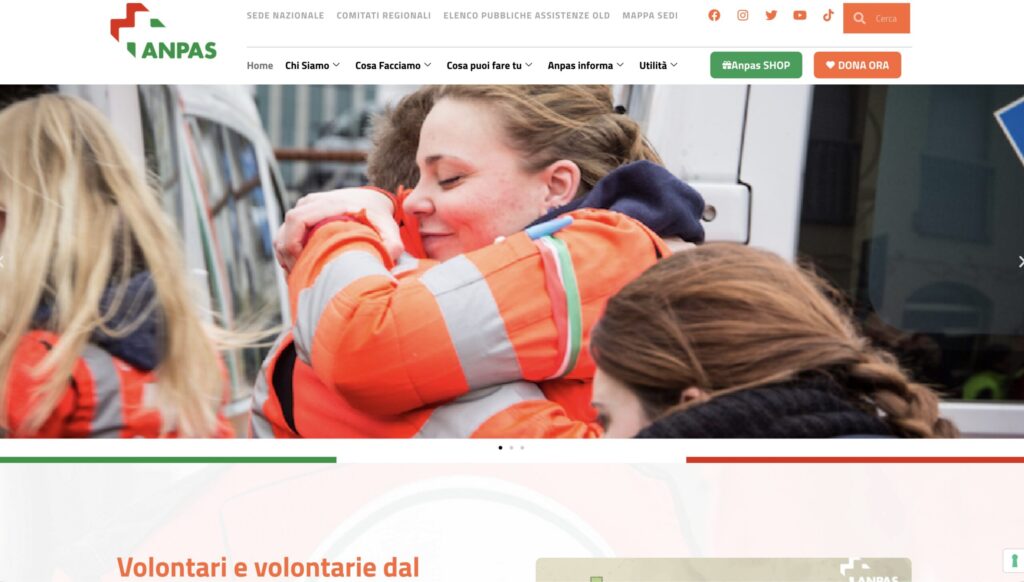
ANPAS, the Italian national association of public assistance organisations, ran its national portal on an ageing Joomla instance and wanted a base that was simpler to update in house. We migrated content and structure to WordPress, rebuilding the site so the editorial team manages it directly, without needing a developer for every change.
GlycoNovi website
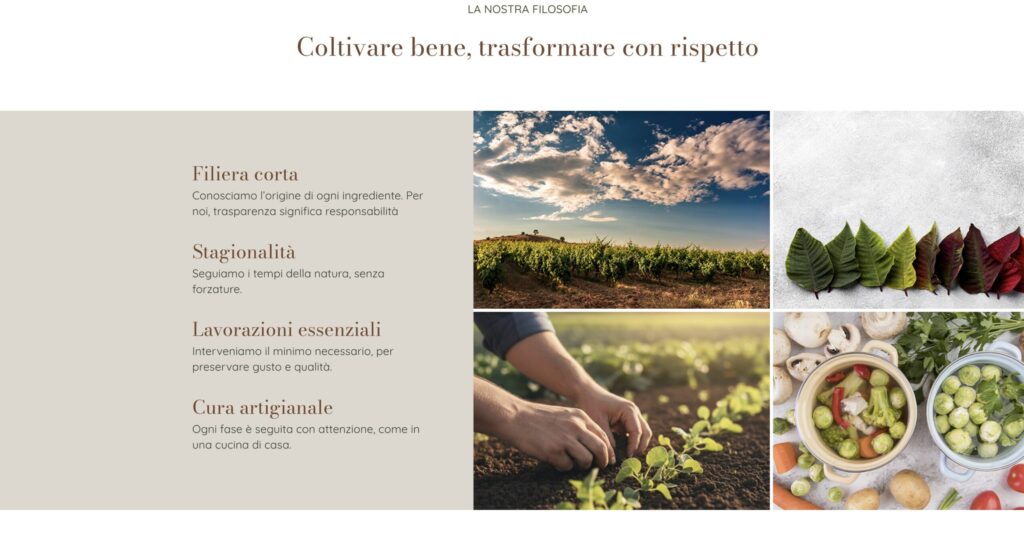
GlycoNovi needed an online presence to introduce what it does. We built the corporate site on WordPress, with a clear structure that is straightforward to update, so the content can grow over time without rebuilding it from scratch.
Liberto website
Giuseppe Liberto wanted an online presence in keeping with the work behind it. We developed the visual identity — logo, palette, typography and brand book — and built the institutional site on WordPress: responsive, structured to be found on search engines and to make getting in touch immediate.
Mpunto site migration
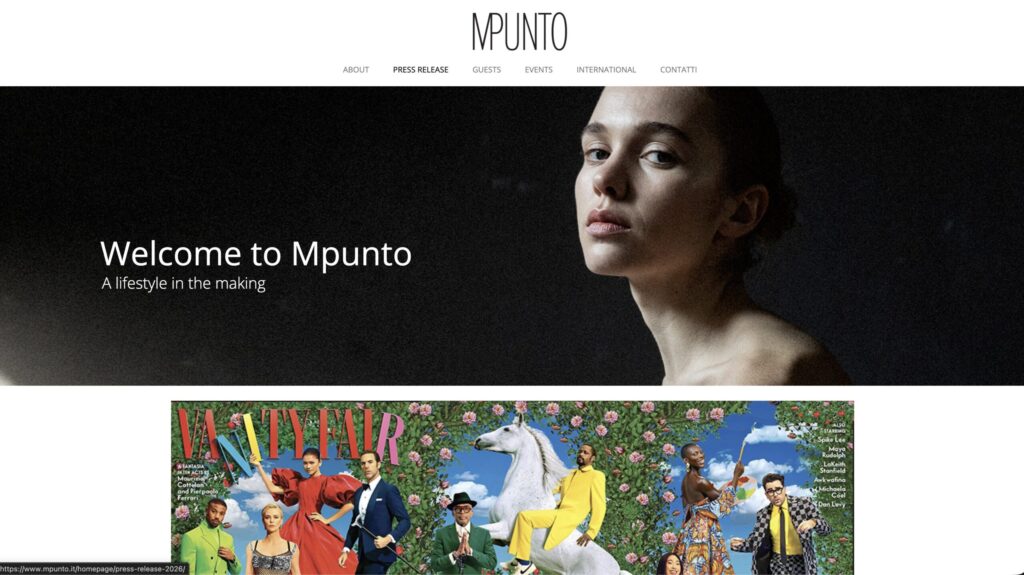
We handled the migration of the Mpunto website, taking care of the content transfer and the go-live.
WooCommerce middleware
The client's WooCommerce store and Zucchetti ERP ran as two separate systems, reconciled by hand at every change. We built a middleware that keeps them in sync both ways — products, orders, stock and customer records — so the time once spent reconciling goes back into the actual work.
Where we are
The Florence office.
Via Panciatichi 10/14
50141 Firenze (FI)
We can meet at Impact Hub or wherever suits you: an hour to work out what the site really needs and how much work sits behind it.
FAQ
Before you ask.
For an institutional site of around ten pages, think weeks; with archives, several languages or connections to other systems it grows. The variable that decides is not development but content: if the copy exists, everything moves quickly.
We can write it or rework it, as a separate service. Many clients prefer to give us an outline and have us fix structure and headings: it costs less and sounds more like them.
Yes, and this is where most damage happens. It needs a complete map of old addresses to new ones, checked one by one after the switch. We do it routinely, including for sites with hundreds of pages.
Yes. We build to the WCAG guidelines and verify before delivery. If an accessibility statement is required, we explain what it involves in your case.
Yes, though the questions behind it are different: payments, shipping, stock. → E-commerce in Florence
When did you last update your site?
If the answer is uncomfortable, it is usually not the fault of whoever was meant to do it: publishing simply costs too much effort. Let us look at where it jams.

ISO 9001:2015 certified
Written requirements, tracked changes, a defined path for every issue.

Benefit Corporation
Goals written into the bylaws, an impact report every year.
Listed on MePA
The Italian public sector e-procurement marketplace.


